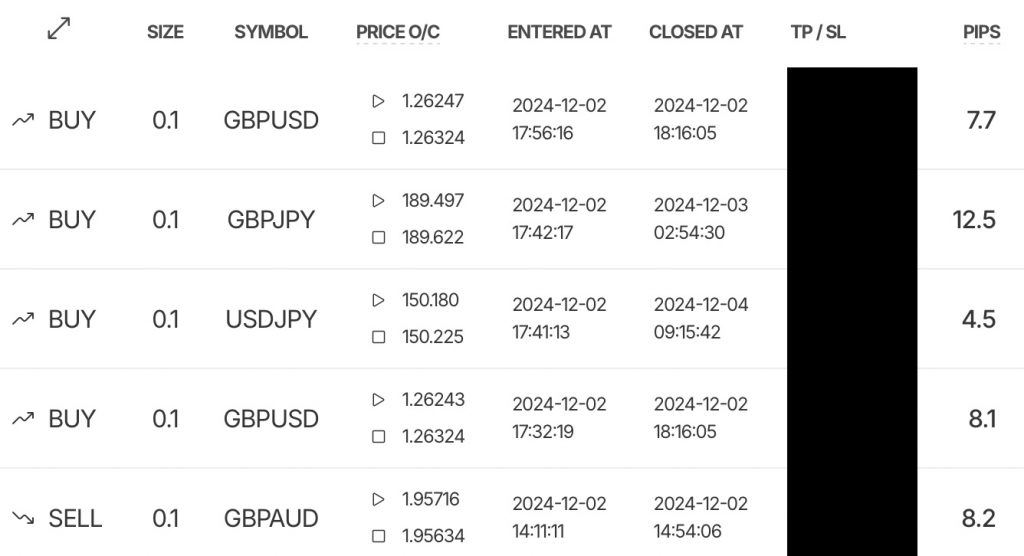
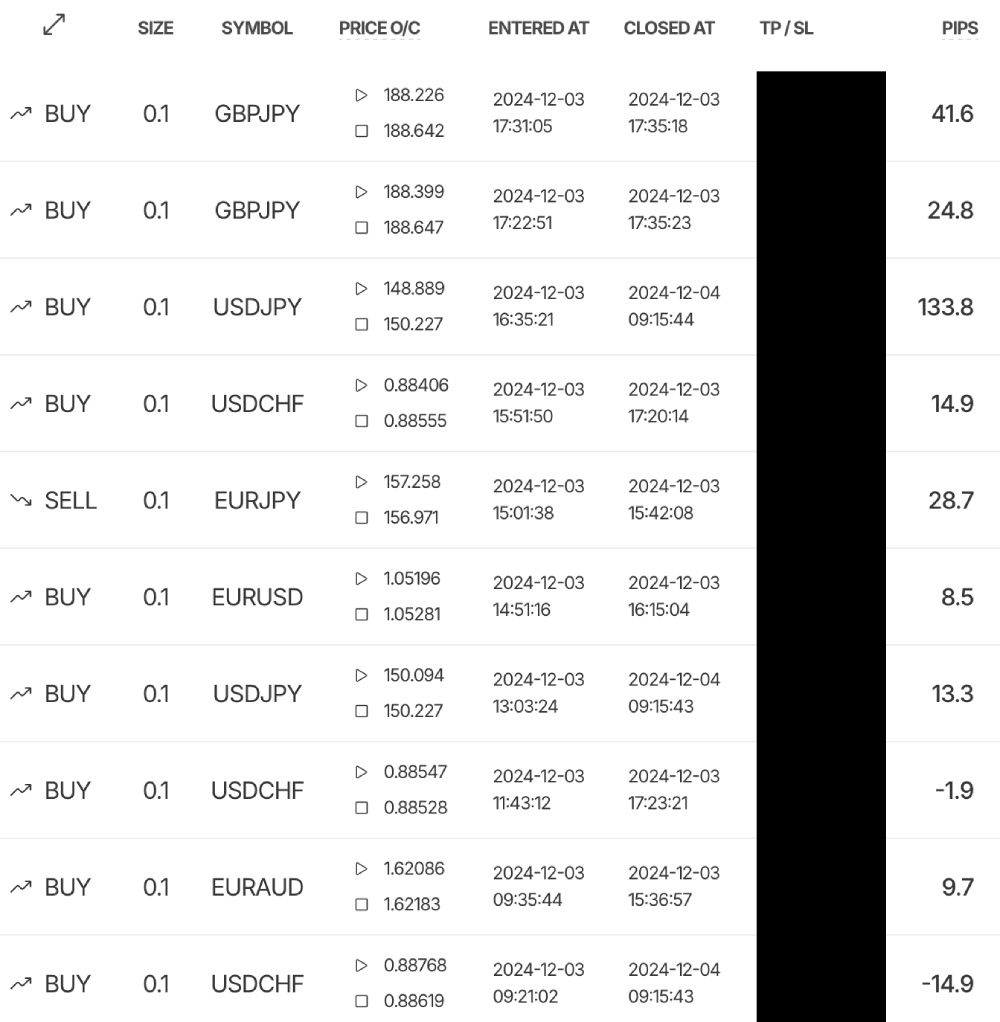
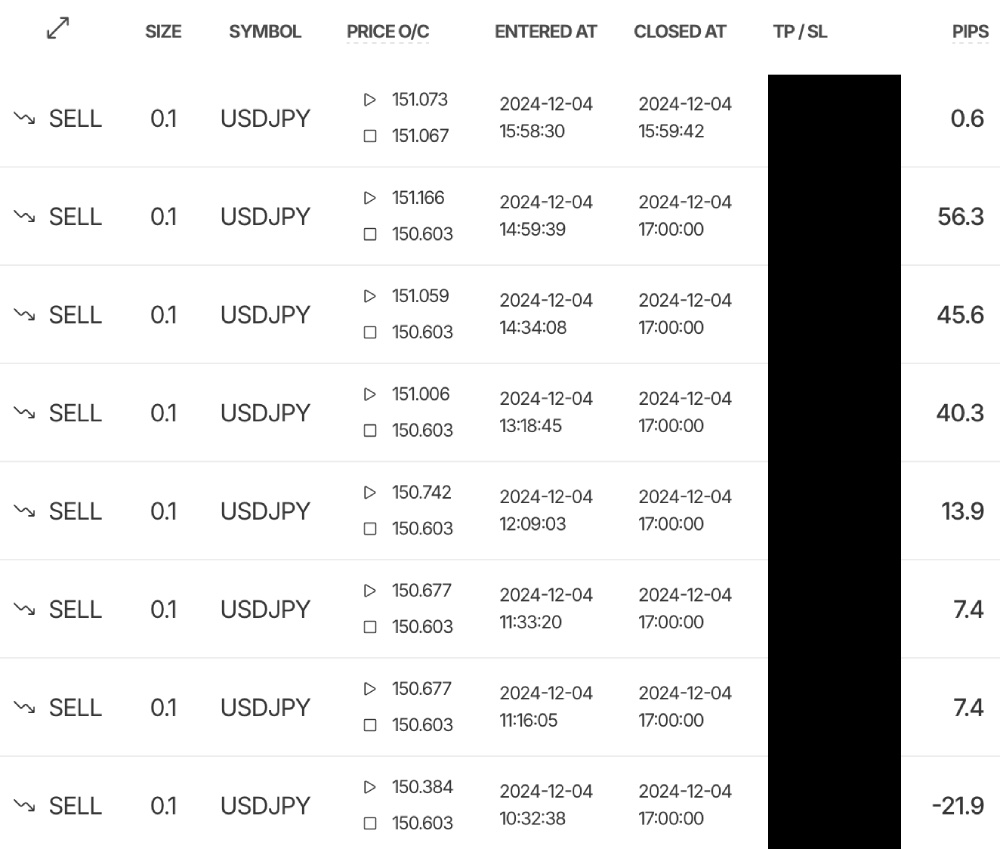
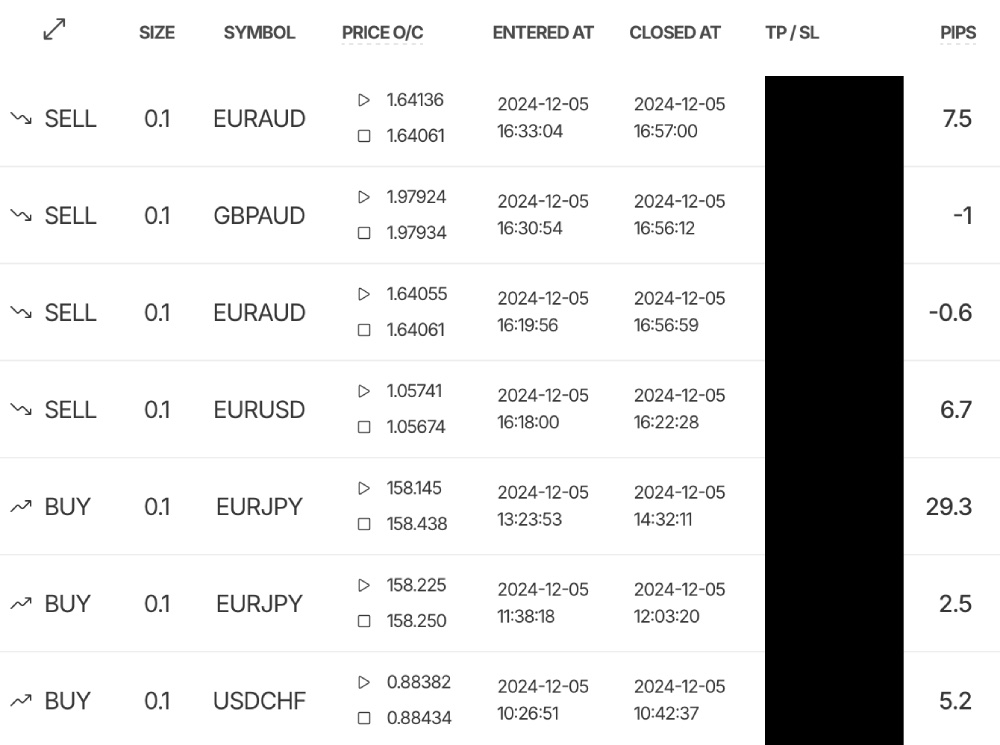
Somebody told me they’d like more transparency on how exactly I trade and how do I manage to make money trading on a consistent basis.
Although I’m transparent as much as I can, the problem with transparency is that if you go too far, you’ll be stripped naked and eventually harm yourself. I can’t show my chart template and I can’t explain my strategies to the public because it’s confidential intellectual property that must be kept private.
However, I’ll try to walk you through my today’s morning GBPUSD short trade on a blank template to give you a basic understanding of how I trade. I’ll explain what I was thinking about and how I was acting as the trade was developing but I won’t reveal any sensitive wording and terminology.
8:15 I start my morning preparation: checking if trade copiers are working properly on VPS, checking news calendar for today, doing a 5min meditation, reading my strategy rules. I’m happy there will be no news today, which usually means it will be a smooth sailing. It’s also July 4th – a public holiday in the USA, but that will only matter after 15:00 in my (European) timezone.
You can click on images to enlarge them.

8:30 ↑ I look at the chart and see a potential short coming up soon, because the price is in a correct zone and cycle and there are attractive targets for moving down.
So I start looking for entries. After a minute I understand that my entry indicator already signalled an entry 20 minutes ago – while I was still doing preparation work. The price has already moved down a bit, so I decide I’ll wait for another entry.
But then I tell myself: another entry might not come because we’re reverting from a perfect entry zone already. Also, you’re just a bit late and the price hasn’t moved too much. Do you want to be a perfectionist or do you want to make money?
8:36 ↓ So I enter short (time marked with a blue arrow, entry price marked with a white line).

9:05 ↑ The price moved down quickly. It appeared logical, but faster than I expected.
9:25 ↑ It violently moved back up again. Price is still in perfect zone, I believe in this trade.

9:30 ↑ I wasn’t stopped out, I’m still in the trade. Price went back up and my indicator gave me another entry signal, but I didn’t enter because it’s at the same price.
10:00 ↑ I’m still in the trade. At this point I’m already grateful for the market allowing me to watch this movement, no matter what the final result will be.

10:20 ↑ A very important moment – price is confidently moving down. But on H1 chart I’m already seeing a danger signal – a reason for price to come back and stop me out. However, although that is probable, it’s not very probable right now, due to the rules of cycles. So I acknowledge that and move on.

10:35-10:55 ↑ The price is struggling to go down, but I was expecting for it to struggle in this area. Nothing to worry about, even with this large candle up.

11:10 ↑ Usually, price doesn’t take so much time to break through this zone – it violently moved up again and my indicator gave me an exit signal. However, my rules do not allow to exit yet in this cycle. Also, I still don’t see any good reasons for price to move back up to my SL immediately. So I stay.

11:50 ↑ At this point I’m 90% confident price will continue moving down to take out the nearest lows. Thank you, market, for this gift.

12:10 ↑ At this point I was doing something else and didn’t watch closely as the price moved down strongly. Also, I’m becoming hungry. It would be nice to have lunch within the next 20 minutes.

12:25 ↑ My indicator signals an early exit. I check my rules and they say I should exit now because we’re already in the cycle which allows that. I think for 18 seconds: targets still look nice and I could stay in this trade longer, but I risk falling into the greed trap. I should follow my rules. So I’m going to exit (timing marked with arrow, price marked with white line).
In hindsight, I left money on the table because price continued to move down, hitting my original TP. But I can’t take it all every time – profit is profit.
My only objective as a trader is a good and logical execution of my strategy – all else is noise.
If you’re asking if it’s necessary to watch trades candle by candle with my methodology, the short answer is no. There are simple rules for trade management which only requires me to check the charts once per hour or when I get a certain alert.
I decided to watch it candle by candle this morning because I wanted to further study the relationship between USDJPY and GBPUSD in live charts. So I watched these two pairs together. Watching live charts with a trade on (skin in the game) is the best way to expand your understanding of the market.
I hope this article gave you a better idea of how I trade. If you’d like to learn to trade like I do, feel free contact me.
Thanks for reading and have a beautiful day.